Evaluation - Sam Swinson
Question 1
In what ways does your media product use, develop or challange forms and conventions of a real media product?Conventions of a thriller film are the key things that make a film a thriller film. Most of these conventions will be used in every thriller film. When creating our thriller film we tried to use as many of these conventions of thriller films as we could so that the audience know that it was a thriller film.
Here are the key conventions of a a thriller film and I will show an example of each convention from a real thriller film and then how we tried to implement it into a our product:
Enigma:
Enigma is another word for mystery and it is when the film will keep the audience questioning what is happening or what has happened. This keeps the audience intersested in what is happening as they want to find out the answers to some of the questions that have been created.
A good example of this is in the introduction to 'The Usual Suspects'.This is becuase there is a mysterious character whos face is not shown through the sequence.
The background music is very mysterious and it adds to the enigma to keep the audience on the edge of their seats because they are wondering what is going to happen and who each of the characters are. Then there is a tilt and pan which follows the mysterious character as he walks down the steps (figure 1). The low-key lighting in this shot makes the character seem like a silhouette so that only his outline is shown and it keeps his identity hidden from both the audience and the other character. On top of this, the pan and tilt still keeps his head just outside of the frame and once the character has got to the bottom of the stairs the shot focus on his feet as he walks and the foley sound is louder that the non-diegetic background music. Additionally, as the characters walks towards the character that is sitting on the floor he walks past another dead body which adds to the enigma that has been created. This works together to help create the thriller because the audience are confused at who the bad characters is.
 |
| Figure 1 |
The character looks up at the other character and his facial expression shows that he is very confused because he can't see who it is because the low-key lighting
keeps his identity secret (figure 2). Then the man in black lifts a
lighter to his face to light a cigarette which reveals his identity to
the other character. However, the audience still don't know who the man
in black is which creates suspense because the character on the floor
knows who he is and the audience are thinking what will happen next and
how these two characters know each other. The audience know that the
character on the floor knows the man in black because the close-up shot
of the character on the floor shows his facial expression
which suggest to the audience that they know each other and it creates
suspense because the audience don't know that is going to happen next.
Additionally, the character on the floor's body language
shows that something bad could happen. This creates a thriller opening
because it is following the conventions of a thriller film.
 |
| Figure 2 |
On the other hand, in our thriller film we, also, created enigma. An example of this was in the last scene then there is a mysterious man carrying a shovel becuase he is about to dig a grave (Figure 3). Enigma was created by the fact that through the whole of the forth scene the audience cannot clearly see the characters face. This keeps the audience questioning who the character is. Also, the use of a black and white effect makes it harder for the audience so see who the character is which adds to the enigma. Addiitonally, the audience only see the side of the characters face as he is walking and as he puts the shovel in the ground (Figure 4) which was done by camera manipulation so when filming we only placed the camera in placed where the audience would not be able to see who the character was.
 |
| Figure 3 |
 |
| Figure 4 |
Restricted and Unresticed Narration:
There are two types of narration there is restricted narration and unrestricted narration. Restricted narration is where elments of the story are not presented in the narraative to create intrigue for the audience. On the other hand, unrestricted narration is where the narrative shows the audience everything giving the audience more knowledge than the character which is often called 'dramatic irony'. In thrillers restricted narration is often used to create engima for the audience.
An example of restricted narration is in the Bourne 'Ultimatum' becuase at the start of the film the audeince don't know why the character is limping. Also, the audience doesn't know why he is being chased by the police. In this sequence the use of restricted narration is used to create enigma to intrigue the audience and keep the audience on the edge of their seats.
Figure 5
- Extreme close-up of a character's feet
- The character is fast walking
- The fast walking could suggest that he is in a chase of he is being chased
- It is restricted narrative because the audience are focus on a small part of what is happening
- This shot has a short duration and the pace of editing matches the pace of the non-diegetic background music which is fast paced
- Black costume with black boots suggests to the audience that he could be a bad character
- Enigma is created right at the start of the sequence because the audience doesn't know who this character is or what he is doing
- This helps make it a thriller because it has one of the main conventions of a thriller
- Non-diegetic background music is fast paced instrumental music (violins)
- The background music is parallel sound because it matches what is happening on-screen
- This keeps the audience on the edge of their seats because it creates suspense
- Snow is flicked from the characters feet towards the camera which suggests he is in a cold country or he could be in winter
 |
| Figure 5 |
Figure 6
- There are lots of cuts on the sequence
- Figure 2 is a cut to a close-up shot behind the character as he is walking
- The audience can see that he is limping which suggests he is hurt, also, he is breathing heavily which suggest that he has been in a chase for a while
- There is a train horn which the character looks towards
- The foley train horn sound is an off-screen sound and as the character looks towards the train the camera pans so the audience can see the train
- The setting is on the street at night
 |
| Figure 6 |
In our piece we used resticted narration to create engima and keep the audience interested. For example, in the first scene right at the start of the whole sequence the investigator says "I am going to ask you one more time you will respond, do you understand?"(Figure 7). This is restricted narrative because the audince don't know why the investigator is asking the other character questions and it intrigues the audience becuase they want to know what has happened for the other character to be questioned.
 |
| Figure 7 |
Tolorov's Narrative:
Tolorov's narrative is the classic narrative in literature and in moving image texts. His theory is that:
- At the start of the film there is an 'equilibrium'
- Then there is a distruption or a 'disequilibrium'
- Next there is a recognition of the distruption
- After this there are attempts to resolve the disruption
- Finally, there is a resolution or closure of the film
Figure 8 +9
- Then there is another POV shot from James perspective looking at the man
- In this shot, he takes off his gloves
- The non-diegetic background music is building up as the man speaks which builds suspense because the audience knows that the man has access to his gun, but, they don't know what he is going to do with it
- There is dialogue between the two characters
- In the dialogue, the audience finds out that this is before James Bond was 007 so this could suggest to the audience that the black and white is used to show the past
- The man's body language is relaxed and his facial expression shows that he will kill Bond if he gets in his way
- Through the dialogue, his facial expression starts to show that he is confident because he knows that he has a gun which gives him an advantage over James
- There is a cut to a 2 shots from the side that shows both characters in the room (Figure 12)
- This long shot shows that James is in the dark and that the man is in the light which suggests to the audience that the man has an advantage of James
- The non-diegetic background music continues to build up which adds suspense and it adds tension
 |
| Figure 8 |
 |
| Figure 9 |
Figure 10 + 11
- Then there is a cut to a flashback of a fight sequence between James Bond and someone that was speaking to the man
- To show that it is a flashback the picture is overexposed and slightly more pixelated
- There is non-diegetic background music that is parallel sound because it matches what is happening on screen so as the James punches the music will peek as the punch is made
- The fast paced action means that the editing is faster paced than the previous sequence
- There are more cuts to different angles
- The fast paced action appeals well to the target audience of young adult males
- The setting for the fight is in a bathroom
- Most of the props like bins and sinks get destroyed by the fight
- The fight adds tension because both characters are punching and James will beat down the man, but, then the man will beat down James
- This is used to keep the audience on the edge of their seats and they feel like they are in the action
 | |
| Figure 10 |
 |
| Figure 11 |
I think that our thriller film doesn't follow Tolorovs narrative. I think this becuase at the very start of the sequence the main character is being questioned about what has happened during the criminal event and what his envolvment in it was (Figure 12). This means that the audience join the story during the disequalibrium. On top of this, the audience won't see what the story worlds equalibrium is like until the end of the film becuase the real criminal will be revealed and things will go back to how they were. In my opinion it is good that we didn't follow all of Tolvorov's narrative theory becuase it helps intrigue the audience and it keeps them on the edge of their seats.
 |
| Figure 12 |
Iconography:
Iconograghy when related to thriller films is when something is icon or represnets the thriller film genre. Something that is icon for the thriller genre it will represent the best of the best about thriller films.
An example of a thriller film that has iconography in it is 'The Usual Suspects'. This film has a few different things that are iconic in it. There is:
- Fire
- Weaponary
- Dark lighting
- Dark or black outfits
- Dead bodies
- Blood
E.G. as the man in black pulls up the gun shallow depth of field is used so as the gun is by his side it is out of focus and then once it is ready to shoot it is in focus (figure 13). The gun is in the centre of the frame and it is the focus point of the frame which links to thrillers because weaponry it iconic to thrillers and the iconic prop used in thrillers is the point of focus in the centre of the frame. Whilst the gun is pointed at the character on the floor the non-diegetic background music is very quiet and it is slow paced string music which adds to the build up of the shooting.
 |
| Figure 13 |
 |
| Figure 14 |
Protagonist & Antagonist:
Protagonist: this is the main character of the story and the story is being written about them. A film can have lots of main characters, but, there can only be one protagonist.
Antagonist: this is the opposite to the protagonist becuase they oppose of are hostile to someone or something.
All thriller films will have a protagonist and an antagonist. For example, in 'The Girl With the Dragon Tattoo' the audince are introduced to something that the antagoinist has sent to the protagonist. However, at the start of the film the audience don't know that the picture that is being focused on has been sent by the antagonist.
Next we get a close-up of the man in the suit. This shows us the side of his face to reveal that he is an old man. Additionally, shallow depth of field
is used to make the audience focus on the man in the centre of the
frame. In this shot, we see the man take off his glasses and place them
on the desk and we see him hang up the phone. As he does both of theses
things he does them in such a way to connote that he is frustrated. This adds to the enigma
and keeps the audience wondering about the package and the two
characters. The character walks out of the frame and the audience
doesn't get to see his face from the front at all throughout the
sequence. As he walks out of the frame the focus is shifted to the
package on his desk as the camera does a slow tilt down to reveal a framed item on his desk (Figure 15). As the picture get closer to being in the center of the frame the non-diegetic background music
increases in volume. Then the picture is in the shot for a long
duration which suggests to the audience that is is going to be very
important in the story of the film and the picture is iconic for 'The Girl with the Dragon Tattoo'. After this, there is a fade to black transition which is used to end the opening sequence.
 |
| Figure 15 |
On the other hand, at the start of our sequence it is not clear from the start who the protagonist and antagonist are. This is becuase the first character shown to the audience is not the protagonist, however, as the opening goes on the audience can see that they are going inside of the man sitting in the chair's (Figure 16) memories and that the doctor and the investigator are both talking about the character sitting in the chair suggests to the audience that he is the protagonist. Additionally, when the audience see the final scene and that it is in black and white and that the audience can't see his face this suggest to the audience that he is the antagonist (Figure 17).
 |
| Figure 16 |
 |
| Figure 17 |
Binary Oppositions:
Binart Oppositions is where you will have two things that oppose eachother. An example of binary oppositions is good verses evil or something like black people verses white people.
This theory was developed by Levi Strauss and he propsed that audiences do not understand a word from its direct meaning, but, more on their understanding of the word along side it's opposite.
A real thriller film that used binary oppositions is 'The Dark Knight Rises' this is becuase the audience don't understand the true strenght of Batmans enemy Bane until they face off in a fight. This is becuase the audience see Batman as the hero so he must be undefeatable, however, when the protagonist and the antagonist fight for the first time within the film (Figure 18) they can understand how strong Bane is because he beats Batman. Additionally, now that the audience know how strong Bane is it means that they can see how much Batman has to train to beat Bane in the final fight (Figure 19) at the end of the film. This shows the audience how much stronger Batman is becuase he has trianed harder and he faught hard to beat Bane which shows Batmans true hero powers.
 |
| Figure 18 |
 |
| Figure 19 |
On the other hand, I don't feel that we used this effectively in our film. This is becuase the audience cannot clearly see two opposites within our opening to a thriller film. Therefore, to improve our piece we could impliment two binary opposites. For example, we could show the protaganist (Figure 20) and the antagoinst and if we put them together then the audience could learn more about the protagonist becuase he would be the direct opposite to the antagonist.
 |
| Figure 20 |
Camera, Sound, Editing:
Other key conventions of a thriller film are camera, sound and editing becuase they all work together to create a thriller film.
An example of a real thriller film that uses camera, sound and editing to help make it a thriller film is 'Shutter Island' becuase it uses camera, sound and editing very effectively to communicate to the audience that it is a thriller film. Also, the use of these conventions helps grip the audience and keep them watching the film.
Figure 21
- The sequence starts with a white screen
- Straight away and enigma is created because all the audience can see is white so they are questioning what is happening
- Diegetic off-screen sound of running water can be heard which suggests that the setting is a sea or close to a big source of water
- Additionally, diegetic off-screen foley sound of a boat fog horn can be heard
- This suggests that the character/s could be in thick fog at sea
 |
| Figure 21 |
Figure 22
- Then there is a fade transition from the pure white to reveal that there is a character on a boat in thick fog at sea
- This is an establishing shot, but, it doesn't show the audience where the character is exactly
- However, it is still unrestricted narrative because the audience can see that the character is on a boat
- The shot is an extreme longshot at eye level angle
 |
| Figure 22 |
Figure 23
- There is a cut transition is a mid longshot of a character that is bent over
- Diegetic sounds of the character struggling can be heard
- The sounds are on-screen as the audience can see the source of the sound on screen
- The sounds suggest that the character has just been sick or he is currently being sick
- Ther is low-key lighting in this shot which means the audience can't see who the is which adds to the enigma that has already been created
- The characters costume appears to be dark in colour, but, it is hard to tell if it is dark or not
- At this point, the audience can't tell if this character is a good or bad character
- There are chains hanging on the boat that are making a diegetic chinging sound
- This could suggest that this character has bad intentions
 |
| Figure 23 |
Figure 24
- The next shot is an over the shoulder shot of Teddy looking at himself in a mirror
- He is shaking which could suggest that he is sea sick and he is trying to suppress it
- The characters costume is a suit with a brown overcoat which suggest to the audience that he could be a police officer
- His facial expression shows that he is determined not to succumb to his sickness
- His body language suggests that he is trying to stop himself from being sick
- His hair style is like a perry comb over which suggest to the audience that this film is set in old times
- Teddy has a band aid on his head which suggests that he has been hurt of maybe in a fight
- This adds to the enigma because the audience doesn't know much about this character
- The shot used shallow depth of field so that his reflection is in focus, but, he is not in focus
- So far this is a good thriller opening because keeps the audience questioning what is happening on screen
- Also, it created an enigma right at the start which keeps the audience interested to find out what has happened and what will happen
 |
| Figure 24 |
- There is a cut to a mid-shot that is a 2 shot of both of the characters
- This shows Teddy stumbles over to the other officer and grabs with both hands the bar in front of him
- The other officer looks at Teddy, but, his facial expression shows that this is his first time meeting him
- Teddy is looking down at his feet as if he is holding in more sick and he is grabbing the bar as if to force is down
- There is non-diegetic background music that is slow paced
- The background music is slowly building up and it is instrumental music like violins
 |
| Figure 25 |
In our sequence I think that we effectively used these three conventions of a thriller film. For example, in the final scene we cleaverly used camera work to hide the characters face (Figure 26) so that it was kept a suprise for the audience at the end of the film. In addition, in the final scene we used sound effectively as it build up through the scene until the end when the music cresendos to reveal the title of the film (Figure 27). On top of this, we used editing effectively to put make the sequence seem like a thriller with use of an establishing shot in the final scene to show the audience that this character is in the middle of no where (Figure 28).
 |
| Figure 26 |
 |
| Figure 27 |
 |
| Figure 28 |
Mise En Scene:
11 areas of Mise En Scene:
- Lighting
- Colour
- Setting
- Decor
- Props
- Costume
- Hair
- Make-up
- Facial Expression
- Body Language
- Composition
An example of a real film that uses Mise En Scene effectively to show that it is a thriller film. The film is 'The Usual Suspect'.
Additionally, the low-key lighting helps to create a mysterious mood. There is some non-diegetic background music that decrescendos so that the audience can hear the flammable liquid falling to the floor. The first time we see the one of the characters is when he is lighting his cigarette with the matches (figure 29). This is a close-up shot and it shows the character has dark coloured costume.
 |
| Figure 29 |
The characters costume is a long black coat, black hat, black trousers and black gloves and these all suggest that this character is a bad person. In this part of the sequence the audience start to see that the setting is a boat (Figure 30).
 |
| Figure 30 |
The character looks up at the other character and his facial expression shows that he is very confused because he can't see who it is because the low-key lighting
keeps his identity secret (figure 31). Then the man in black lifts a
lighter to his face to light a cigarette which reveals his identity to
the other character. However, the audience still don't know who the man
in black is which creates suspense because the character on the floor
knows who he is and the audience are thinking what will happen next and
how these two characters know each other. The audience know that the
character on the floor knows the man in black because the close-up shot
of the character on the floor shows his facial expression
which suggest to the audience that they know each other and it creates
suspense because the audience don't know that is going to happen next.
Additionally, the character on the floor's body language
shows that something bad could happen. This creates a thriller opening
because it is following the conventions of a thriller film.
 |
| Figure 31 |
In our final product we, also, used Mise En Scene effectively to show the audience that it was a thriller film. For example, the setting for the final scene was in the middle of trees and hills where there are not many people around this is the setting area of Mise En Scene and it shows to the audience that this is a thriller film because the place this mysterious character is, is abandoned (Figure 32). Also, the mysterious character is carrying a prop shovel which shows to the audience that this is a thriller film becuase the character could be using the shovel as a weapon which is iconic for thriller films (Figure 33).
 |
| Figure 32 |
 |
| Figure 33 |
Themes and Issues:
The themes and issues of a thriller films are the certain things that the film is about. For example, the thriller film 'Zodiac' is a film about the Zodiac killer which means that the themes and issues of that film are law, justice and woman killers. The themes and issues that are in a thriller film depend on what the film is about, but, most thriller films tend to have the same kind of themes and issues. On the other hand, if the film was a horror film then the themes and issues would be more about exploring the nature of 'monstorous'.
I think that our thriller opening showed the correct themes and issues the show the audience that the film was a thriller. For example, our film followed someone that had been involved in a criminal event which means one of the themes or issues was criminality. On top of this, there was and investigator in the piece which means that our thriller film uses law and justice as one of its themes and issues because the main character get justice for the criminal event that he was the victim for at the end of the film.
Question 2
How does your media product represent particular social groups?Different media products can prepesent particaular social groups and each media product can represent more than one of these groups throughout the piece. The different groups are:
- Gender
- Age
- Ethnicity
- Sexuality
- Class and status
- Disability / ability
- Regional identity

Camera:
- Low angles - through the piece lots of low angles are used (Figure 34). They are used to show dominace, for example, in the first scene a low angle is used to show the investigator looking down on Rick (Figure 34). This is used to represent gender becuase in the piece the males are the dominant gender and it shows to the audience that they have the power.
 |
| Figure 34 |
- High angles - in the piece high angles are used to represnet age to the audience. For example, in the first scene Rick is looking up at the investigator (Figure 35) and a high angle is used to show that the investigator is standing higher than Rick and that he is towering over him. This represents age becuase the investigator is older than Rick and he is looking down on Rick to show his authority over the younger Rick.
 |
| Figure 35 |
Mise en scene:
- Costume - all the character have their own unique costumes for the different scene they are in and their costume will depend on what the character is doing in the scene. In our piece we used costume to represnent age and this was done throughout the sequence. For example, in the second scene Rick's friend has a costume that shows to the audience that he is young becuase he is wearing a hoodie (Figure 36), whereas, the investigator in the first and third scene (Figure 37) is wearing a suit to show that he is older than Rick and Rick's friend.

Figure 36 
Figure 37


- Setting - in the opening to the thriller film that I helped create three different settings are used. The settings were picked to represent gender, but, they also represent age. The third scene is set in a pub (Figure 38) which represents gender because the stereotypical people that go to pubs are men. This location was chosen for the reason that all the main characters in the seqence are men.

Figure 38

Editing:
 |
| Figure 39 |
- Pace - through the sequence the main transition that is used is a cut, but, there are also some fade transitions used. The cuts are used to help pace the piece and this is used to represent gender. For example, in the final scene (Figure 39) lots of cuts are used to build up the tension and build suspence and create a fast pace. This represents gender becuase males are often associated with films that have fast pace and action.
Sound:
 |
| Figure 40 |
- Diegetic sound - this is used within the piece in different places and it is used to represent gender. For example, in the pub scene (Figure 40) we added some diegetic background sound what was people talking in a pub and glasses clinging together. This represents gender becuase the people talking in the background are males and a pub is often stereotyped to have more males in it.
- Dialogue - this was used to represent age throughout the piece. This was done through what the characters were talking about and how they were talking. For example, the things that the characters were talking about in the first and third scene (Figure 41) were young adult and adult themed becuase they were talking about a criminal event and they were talking about being drugged which represents older people and not children. On top of this, in the second scene (Figure 42) Rick's friend was talking a serious tone and telling Rick that he had 'unfinished business' and this serious tone continues to represent older ages groups.
 |
| Figure 41 |
 |
| Figure 42 |
Representing Characters:
Rick:- This character was created so that the audience feel sympathy for him because he has been wrongfully convicted for a crime which has caused mental scaring for him.
- Additionally, we want the audience to like the character becuase he is trying his hardest to remember what happened, but, he can't.
- We didn't create this character to challange any stereotypes and we didn't create him becuase of convenience.

The investigator:
- This character was created so that the audience don't like him at the start, but, then near the end of the film they start to like him more. This is becuase at the start of the film he is aggressive to the innocent Rick.
- On top of this, the character was created from the stereotypical police investigator who has a short temper and who will do anything to get the answers he wants. He was created from our assumptions about a police inverstigator.

- This character was create for the audience to like because he is there to protect Rick from the investigator. He was a nessisary character to stop the investigator from over-reacting and hurting Rick too much.
- This character was created from a doctor stereotype who wants justice for their pacient. We didn't give too much thought into this character and didn't think lots about his stereotype becuase although he was a in a lot of the opening he would not be in a lot of the full film.

- Rick's friend was create from a stereotype of someone that gets into trouble often and who regularly vists pubs.
- There was not lots of through put into the creation of this character because he has a very small role throughout the whole film. His stereotype was created for convenience and from cultural assumption.

Example of Representing Social Groups:
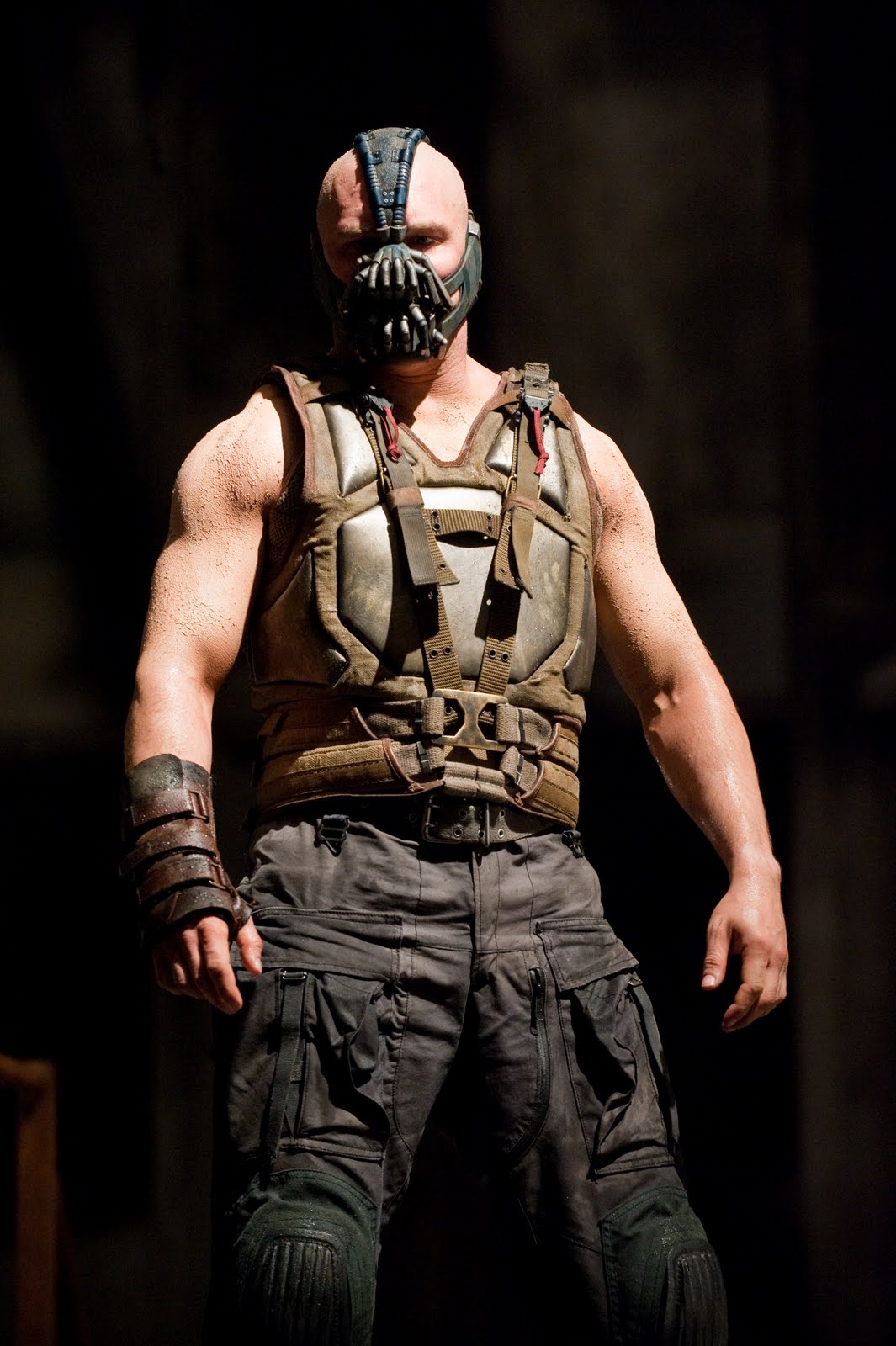 One example of a real film that shows a certain group is The Dark Knight Rises. This film clearly shows class and status throughout the film. For example, in the middle of the film Bane and his army have taken over Gotham city and all the rich people who have a high class and status are thrown to the bottom of society. This is because they don't have anyone to protect them. This represents class and status because it puts everyone one equal ground where the rich people don't have higher status that poor people. However, Bane is the controller of the city which means that he has a higher status that everyone else because he has more physical strenght than everyone else.
 This is just one example of a real film that uses social groups and represents them within the film. Another example is Four Lions and within this film ethnicity is represented. For example, the film is based around four suicide bombers. In this film the main characters are sterotypes and they are what British people think terrorists which represents ethnicity becuase not all foreign people are terrorits and they are not just people who blindly follow orders and that are not very intelligent. Additionally, it plays on the sterotype that all musilms are terrorits which in real life is not true.
Question 3
What kind of media institution might distribute your media product and why?When creating a film there are three stages to it:
- Film production - which is the making of the film
- Film distribution - which is where you secure a place for you film for home view or for people to view in cinemas
- Film exhibition - which is the place the audience go to watch the film e.g. a cinema

Distribution Methods:
As a production comapany we get to choose how our film is distributed so that audiences get to see it. There are two ways a film can be distributed:- Distribution company - this means that will will license the film and give it to an independent film distribution company. However, because this method uses a middle man it means the production company only get a certain percentage of the film.
- Distribute it yourself - this means that you will distribute the film by yourself with no help for an extra company. The good thing about this is that you can make use of digital distribution, for example, youtube where the video can be monitised so you can make money by having adverts play before, during or after the video. Also, you could use sites like vimeo.
Licensing Films:
When a film is licensed to a distribution company it means that the company has the legal rights to do what ever they want with the film because they have paid the production company for the rights to the film.How The Audience See The Film:
There are a few different ways that the audience can see a film. Any platform that the audience watch the film on will be choosen and done by distributers. That could be a distribution company or the production company doing it itself.Ways people can watch the film:
- Cinema
- Home viewing and mobile viewing:
- DVD
- TV
- Downloading - film is then owned by the user. The user can play that film offline
- Streaming - user has permission to watch it. The user doesn't get to keep it

- Released in cinemas - 0-4 months
- Released on DVD - 4-6 months
- Released on pay TV / VOD - after 6 months
- Released on free to air TV (e.g. BBC or ITV) - after 2 years
Cinemas Our Film Would Be Shown In:
There are two types of cinema:- Mainstream cinema
- Cineworld

- Odeon

- Vue

- Independent cinema
- Duke of Yorks in Brighton

Our film was created on a low budget by an independent British film production company. This means that we don't have lots of money to spend on distribution, therefore, our film would most likely appear in an independent cinema like the Duke of Yorks in Brighton. This is because we can't afford to have our film appear in mainstream cinema.
Digital Distribution:

With the growth of broadband there are more ways to watch a film becuase now you can watch films on online services like Netfilx. Netfilx is a very new service that only came to the UK in 2012 which means it has not been used to its full potential yet. A competitor to Netflix is Amazon Prime. If we choose to use a film distribution company then the aim of the company would be to get our film on Netflix becuase then our film would be recommend to the target audience due to the recommendation system on Netflix.

Additionally, you could use services like youtube or vimeo. The advantage to using a service like youtube is that you release the film to a global audience, the video can be monitised so that you can make money from people watching it and youtube is a free to post to site so it doesn't cost anything to upload the film on their site. Vimeo is the alternative website to youtube, however, you have to pay to post videos to it which is a disadvantge. Also, vimeo has not advertising which means that you can't earn money the same way as youtube.
An example of how much a youtube video can earn is Nick Lawrance who is a director and he released a film called Time Expired on youtube in late 2011 and it now has be viewed around 700,00 times and its getting between 2000 and 3000 views per day. He said that they have earned $3400 in ad revenue in the past year which is amazing becuase it was posted for free.
 Youtube is very powerful becuase you can have a snowball effect happen and to encorage this effect to happen to the film when it is posted you can:
- Have screening of the film
- Do press releases
- Set up a Facebook page
- Give out lots of DVD's
Marketing Of The Film:
A big blockbuster film will spend lots and lots of money on marketing the film and its the job of the film distribution company. Some examples of marketing are:- On a bus
- Bus stops
- TV adverts
- Online adverts
- Cinema adverts
- Bilboards
- Talks shows with the cast
- Merchandice
- Viral advertising campaign
- Trailers
- Film posters

- Online adverts
- Viral advertising campaign
- Trailer
- Film poster
Conclustion (What to use):
There are two ways that I can choose to distribute the film. There is using a independent distribution company or I can do it on my own and distribute it myself.If I choose to use a independent film distribution company then I could use Revolver Entertainment which is a private film distrubution company. Ways they could promote the film would include: film poster, online adverts and or creating a trailer for the film to show online. They would most likely secure exhibition for the film in an independent cinema like the Duke of Yorks in Brighton and maybe on Netfilx.
On the other hand, our production company could got it alone and not use a distribution company. If we did this then we would put our film on sites like YouTbe and vimeo.
Overall, I think the best option for our film is to do it our selves an put the film on a site like Youtube. I think this because this way we don't have to pay for the distribution of the film instead we get to take all of the revenue becuase our film would be monitied.
Question 4
Who would be the audience for your media product?Target audience - they are a particular group of people that the film is aimed at.

When creating any media product you have to have a target audience and they are the people that you will try to create your media product for. People that are not the target audience can still see or use the media product even though it is not design for them in mind.
Our Target Audience:
The target audience for the opening to the thriller film that I created was young adult males. So this means males from the age of 15 to 20.
 Choosing The Target Audience:
We chose the target audience for our media product very early on in the planning stage so that the final product would suit the target audience. If we didn't choose the target audience for the piece early on then it wouldn't attract the target audience properly.
Knowing The Target Audience:
Knowing the target audience of the media product it very important because it means that you can shape the whole piece around the way they think and the way they understand certain things. Additionally, knowing your target audience allows you to create relatable characters that the audience might be able to understand and feel like they know the character.
Why knowing the target audience is so important:
Other Films For The Same Target Audience:
Here are some other films that the target audience of our media product might be interested in:


I got these films from and interactive film guide which shows different film releases and the target audience of the films.
Question 5
How did you attract/ address your audience?After choosing the target audience for the media product we started to plan and create the piece. The reason we chose the target audience before we start creating the piece is so that we can shape it to fit the target audience. For example, creating characters or settings to match the target audience. Doing this will engage the target audience more into the media product.
Examples
Here are some examples in our final piece where we tailored the film to the target audience:- Rick's Friend
 |
| Figure 43 |
- Title
 On top of this, the title was something that the target audience liked. This is because we did lots of audience research showing different versions of the title that we created to people that were part of the targer audience. In the end we used the title 'Flashback' for our final product after the audience research. The audience liked this title becuase it was a short and punchy title which attracted the eyes of the audience. Also, the title tells the audiene what the film is going to be about which from the audience research we can see that they liked knowing that the film is going to be based around someones flashbacks.
- Design Of The Title
 |
| Figure 44 |
- Scene 1
 |
| Figure 45 |
- Mysterious Man
 |
| Figure 46 |
Question 6
What have you learned about technologies from the process of constructing this product?Question 7
Looking back at your preliminary task, what do you feel you have learned in the progression from it to the full product?This is a video of me discussing Question 7.
